Mobile Auto Repair + AI: How to Fix the Hidden Revenue Leak
The phone is a lifeline for mobile auto repair—yet it’s the easiest thing to miss when you’re under a car. Discover how AI voice agents turn every ring into revenue.
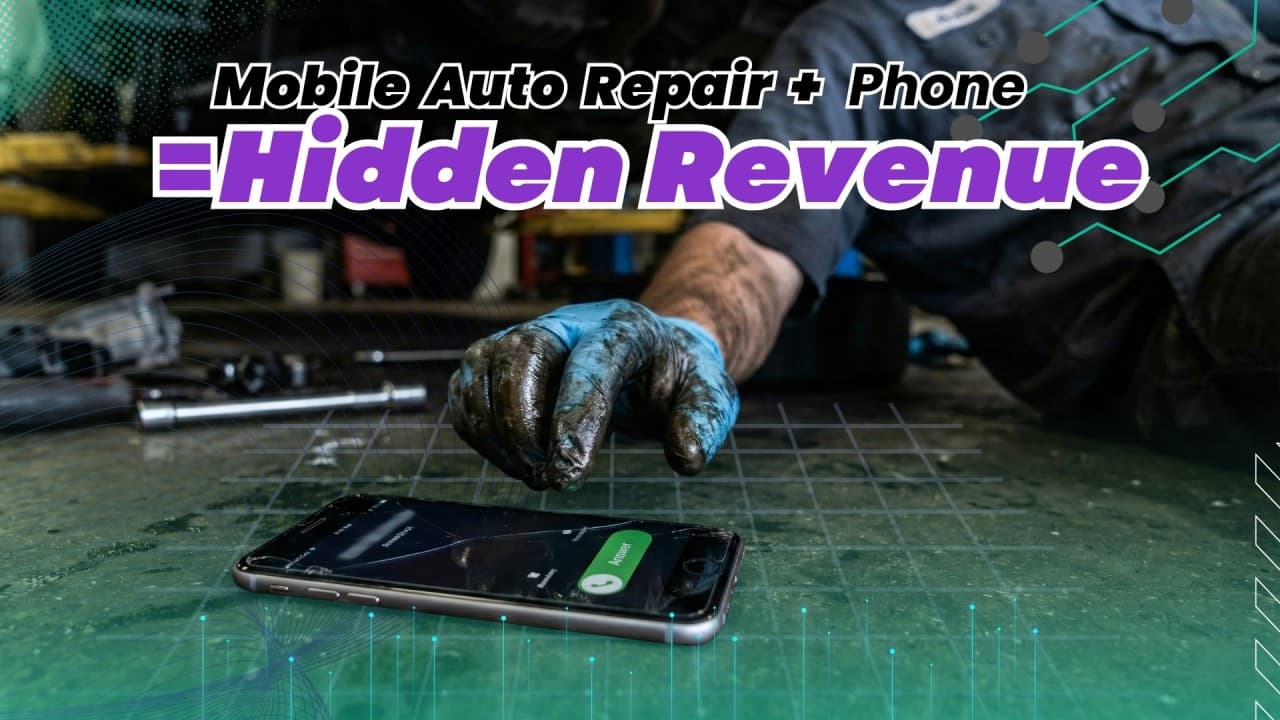
Picture this:
It’s 7:18 PM. You’re on a driveway finishing a brake job. Hands greasy. Customer texts. Another customer calls. Then another.
You want to answer… but you’re literally under a car.
And that’s the painful reality for mobile auto repair businesses: the phone is your lifeline—yet it’s the easiest thing to miss when you’re doing the actual work.
The good news? A fully customized (white-glove) AI voice agent can turn every ring into revenue without turning your shop into a robotic call center.
Why the phone still matters (even in 2026)
People still call when it’s urgent.
- In a study on urgent interactions, telephony was the #1 first-choice channel (49%) across age groups.
- TransUnion reported nearly 80% of consumers say phone calls are important for communicating with businesses (even though many are cautious about unknown numbers).
For mobile auto repair, “urgent” is basically the whole business:
- “Can you come today?”
- “How much for pads + rotors?”
- “My car won’t start—help.”
The real leak: speed and missed calls
Two stats should make any owner pause:
- An MIT / InsideSales lead response study found the odds of qualifying a lead drop ~21× when you respond in 30 minutes instead of 5 minutes, and drop ~4× from 5 minutes to 10 minutes.
- Talkdesk cites an AT&T survey that customers hang up after ~90 seconds on average, and another source noted ~34% of callers who hang up won’t call back.
In plain terms: if you’re busy and they can’t reach you fast, they’ll try the next shop.
What a white-glove AI voice agent actually does
This isn’t “press 1 for sales.” A customized voice agent can answer like a trained front-desk teammate—using your policies, pricing rules, service area, and scheduling logic.
1) Captures and qualifies every lead (24/7)
- Answers every call instantly (no hold music, no voicemail)
- Collects vehicle + issue details (year/make/model, symptoms, location)
- Confirms service area, hours, urgency, warranty policies
- Filters out poor fits (“out of zone”, “not the right service”) politely
2) Books jobs without back-and-forth
- Offers time windows based on your availability
- Confirms address + access notes (“gate code”, “parking”, “call on arrival”)
- Sends SMS confirmation and adds it to your calendar/CRM
3) Reduces no-shows and last-minute chaos
- Automated reminders + reschedule handling
- “Running late?” check-ins
- Post-visit follow-ups (“Any warning lights now?”)
4) Handles repeatable calls that steal your day
- “Where are you located?” “What’s your service area?”
- “Do you do alternators/starter/battery installs?”
- “How much for X?” (with guardrails, ranges, or “starting at” pricing)
5) Escalates like a human when it should
The best setup is hybrid: AI handles 70–80% of routine calls and routes complex situations to you with a clean summary.
Why “fully customized” is where the real value is
Most businesses don’t need an AI agent. They need their agent.
A white-glove build typically includes:
- Your script + tone (“friendly but direct,” “no upsell pressure”)
- Your quote logic (trip fees, after-hours rates, diagnostic fees)
- Your constraints (service area ZIPs, vehicle types you won’t take)
- Your workflows (Google Calendar, CRM, SMS confirmations)
A simple ROI example
Let’s say you miss 5 calls/week because you’re on jobs. If only 2 of those would’ve become booked jobs at $180 average ticket, that’s:
2 jobs × $180 × 4 weeks = $1,440/month in recoverable revenue.
And that doesn’t count repeat customers, bigger tickets, or referrals.
The Litmus Test
If any of these are true:
- You miss calls while on jobs.
- After-hours calls go to voicemail.
- You lose time repeating the same answers.
- Scheduling is eating your day.
…a white-glove AI voice agent will pay for itself quickly.